
With constant national pressure to fix the freight rail network and clear major port backlogs, operational managers rely heavily on Transnet internships to bring in additional engineering and logistics support across their massive coastal and inland sites.
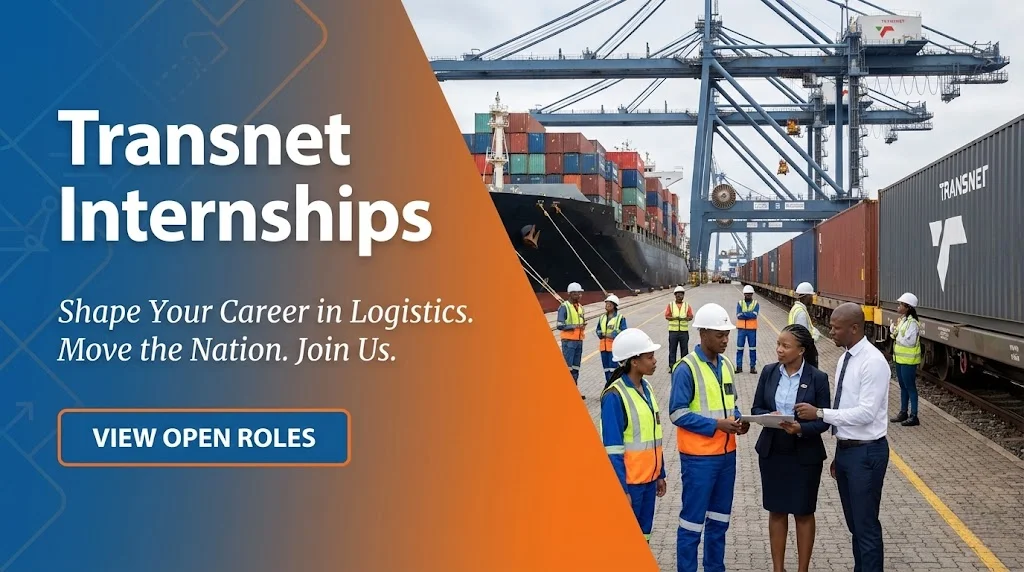
A placement here means dealing directly with heavy state infrastructure. Depending on which operating division hires you, you might be stationed at the Durban Container Terminal coordinating ship-to-shore cranes, or sent to the Richards Bay coal line to assist with heavy locomotive maintenance.
Because private logistics companies rely entirely on these state-owned ports and rail networks to move their goods, they actively headhunt graduates who already understand how the internal systems operate. Spending a year here teaches you the exact customs protocols and rail scheduling mechanics that private freight forwarders struggle to navigate daily.
Just be prepared for extreme state bureaucracy during the application phase. Because it is a heavily unionized State-Owned Enterprise (SOE), HR clerks follow the rulebook to the letter. A missing police certification stamp on your degree or a failed pre-employment medical fitness test will result in an automatic rejection, regardless of your university grades.
Our Honest Take: State Logistics vs. Private Freight?
Our Analysis: A private logistics company like DSV or DHL moves fast and uses highly modern digital tracking software. Transnet, however, gives you unmatched exposure to heavy, large-scale infrastructure. Private companies deal with trucks; Transnet deals with 100-wagon trains and massive maritime vessels. The downside is the heavy state bureaucracy—procuring a simple spare part for a broken crane can sometimes take weeks due to public finance rules.
Expert Pro Tip: “Target the Operating Divisions.” Do not just search for ‘Transnet’. The company operates through distinct divisions that hire independently. If you studied marine biology or port management, target the Transnet National Ports Authority (TNPA). If you studied mechanical engineering, look for Transnet Engineering (TE) or Transnet Freight Rail (TFR) circulars.
Job Overview: Stipends & Allowances (2026 Estimates)
| Qualification Level | Est. Monthly Stipend (ZAR) | Programme Type |
| BSc Engineering (NQF 7) | R8,500 – R12,000 | Graduate Engineer |
| BCom / Logistics Degree | R7,000 – R9,000 | Supply Chain Intern |
| National Diploma (NQF 6) | R6,000 – R7,500 | In-Service Trainee |
| Trade Test / N6 (NQF 5) | R4,500 – R6,500 | Artisan Apprenticeship |
Which Operating Divisions Take Interns? (2026 Breakdown)
Because the organization is so vast, they recruit strictly according to the operational needs of their separate entities:
1. Transnet Freight Rail (TFR) & Engineering
- Target Audience: Graduates holding BSc Degrees or National Diplomas in Mechanical, Electrical, or Civil Engineering.
- The Daily Grind: Keeping the trains on the tracks. You will assist senior engineers in repairing massive diesel and electric locomotives, testing rail network signaling systems, and planning maintenance schedules for the heavy-haul coal and iron ore lines.
2. Port Terminals (TPT) & National Ports Authority (TNPA)
- Target Audience: Graduates in Maritime Studies, Logistics, Customs Clearing, or Marine Engineering.
- The Daily Grind: Managing the docks. You will be stationed at coastal hubs like Durban, Ngqura, or Cape Town. Trainees help coordinate the loading and offloading of international cargo vessels, monitor the operational efficiency of massive ship-to-shore cranes, and process customs documentation.
3. Group Corporate & Supply Chain
- Target Audience: BCom graduates in Procurement, Financial Accounting, Human Resources, or Information Technology.
- The Daily Grind: Running the commercial administration. You will help audit large-scale state procurement tenders, process vendor payments, or assist the IT division in maintaining the massive digital networks that link the ports to the inland rail hubs.
The Reality of Working in Heavy Infrastructure
A placement at a major port or rail depot provides incredible technical exposure, but the daily working conditions are highly industrialized:
- Extreme Safety Protocols:
Heavy lifting equipment and moving trains are incredibly dangerous. Safety compliance is absolute. You will wear full Personal Protective Equipment (PPE) daily, and random alcohol breathalyzer tests are mandatory before you are allowed to walk onto any active operational site.
- The 24/7 Roster:
Commercial ships do not stop docking at night, and freight trains run constantly. If you are placed in an operational role rather than a corporate desk, your schedule will not be a standard 8-to-5. You must be prepared to work long, rotating 12-hour shifts, including weekends and public holidays.
- Navigating the Unions:
The workforce is heavily unionized. As an intern, you have to quickly learn how to communicate respectfully with veteran blue-collar workers and shift supervisors. Understanding workplace relations and strictly following the chain of command is essential to surviving your contract.
Featured “Hot” Programme: Logistics and Port Operations Graduate
To handle the severe congestion at commercial ports, the terminals constantly recruit sharp logistics graduates to help streamline the movement of shipping containers.
- Estimated Stipend: R7,000 – R9,000 per month (18-to-24-month contract).
- Location: Durban Container Terminal or Cape Town Port.
- Requirements:
- A recognized Degree or National Diploma in Logistics, Supply Chain Management, or Maritime Studies.
- A strong understanding of freight forwarding, customs clearing, and international shipping terms (Incoterms).
- Must be a medically fit South African citizen.
- Willingness to work in a high-pressure, 24-hour shift environment.
How to Apply Correctly? (The State Process)
Transnet receives thousands of applications per circular, so handing a printed CV to a security guard at their corporate offices will get you nowhere. Their entire recruitment pipeline is strictly compartmentalized between their internal digital systems and state training partners.
The Central E-Recruitment Portal
All corporate and engineering graduate intakes run exclusively through the Transnet Careers Portal. You must register a profile on their SAP-driven applicant system. The biggest trap here is the file limit. The system is notoriously strict about attachment sizes. If your combined certified ID, Matric certificate, and academic transcripts exceed 2MB, the upload often silently fails. You will assume your application went through, but the HR dashboard will just see a blank profile and automatically bin it.
The TETA Learnership Route
If you do not have a university degree and hold a Matric or an N6 from a TVET college, the main corporate portal is usually the wrong place to look. Instead, you need to track the Transport Education Training Authority (TETA) announcements. Transnet uses TETA funding to directly recruit youth for highly specific blue-collar learnerships—such as cargo handling, marine motorman training, and rail network apprenticeships. These are frequently advertised on the SETA platforms before they ever reach the public domain.
Local Depot Notice Boards
While the national graduate programmes are strictly online, localized operational hubs still handle their own blue-collar intakes. Transnet National Ports Authority (TNPA) offices at smaller coastal harbors like Saldanha or Mossel Bay, as well as inland Freight Rail (TFR) maintenance yards, regularly pin physical apprenticeship notices right on their main security gates. If you live close to a major rail depot or port terminal, physically checking the community board can give you a massive head start on local yard trainee roles.”

Thabo Mandla is the lead Career Guide Expert at DurbanTalent.com. With over 10 years of practical experience in South African recruitment, he specializes in connecting professionals with top employers in Aviation, Finance, and Hospitality. Thabo combines his background in Human Resources with direct insights from local hiring managers to provide job seekers with accurate, actionable, and reliable career advice. He is passionate about helping candidates navigate the Durban job market and achieve their professional goals.